


Orthodox Bible & Calendar
Byteblocks, LLC
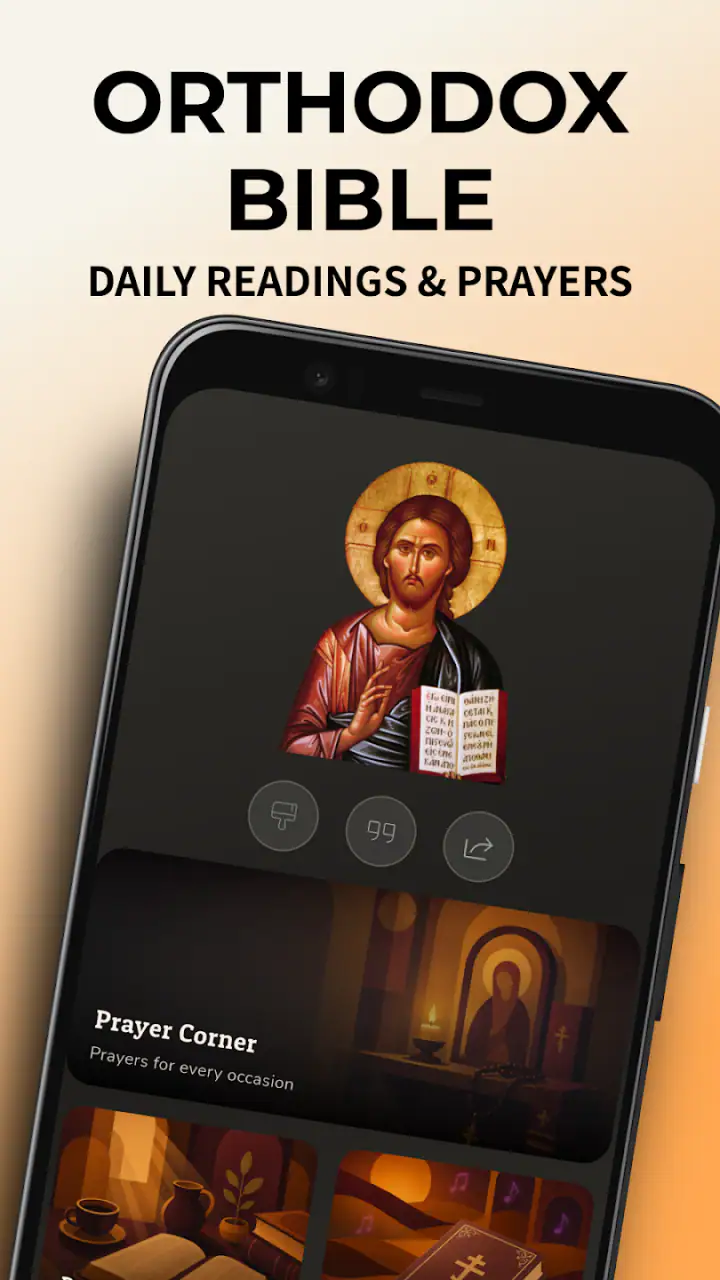
I approached Orthodox Bible & Calendar as the kind of app I would keep nearby for short moments of prayer, scripture reading, and planning rather than as a replacement for every book on my shelf. That distinction matters. Its appeal is the way several Orthodox-focused resources sit together: Bible reading, daily prayers, the Psalter, reading plans, and a calendar. I found that combination more useful than opening separate general-purpose apps, especially when I wanted to move from a scheduled reading into prayer without losing my place.
Developed by Byteblocks, LLC, this free Books & Reference app is aimed at an Everyone audience and runs on Android 7.0 or later. It has built a 4.7 average from around 2K ratings, with more than 100K installs, so it is clearly being used beyond a tiny group of early adopters. The current version is 7.1.1. Optional purchases range from $0.99 to $74.99 per item, which is worth remembering before treating “free” as meaning that every possible part of the experience is necessarily included without a purchase.
Where the first-use friction usually appears
The app asks you to choose a rhythm, not just open a book
The first adjustment is mental. A normal Bible reader usually gives me a text, a search field, and perhaps bookmarks. This app presents a more distinctly Orthodox reading environment, where the calendar, prayers, Psalter, and plans can influence what I do next. That is helpful once I understand the layout, but it can feel busy if I only wanted to find one passage quickly.
I recommend spending a few minutes identifying the areas you will actually use. If your main goal is a daily reading habit, begin with the reading plan or calendar rather than exploring every section. If prayer is the priority, start with the daily prayers and treat the Bible as the next step. This simple choice prevents the common mistake of judging the app before giving it a clear job.
Calendar language may need a moment of orientation
The calendar is not merely a generic date page. In an Orthodox-focused app, the date can be connected with the church year and the day’s devotional context. Someone coming from a standard calendar or a general Bible app may expect every screen to behave like a neutral reference tool. Here, the calendar is part of the spiritual workflow, so its value becomes clearer when I use it to decide what to read or pray today.
Related News

Why WhatsApp Messenger Still Makes Everyday Communication Feel Easy

Jurassic World: The Game Is the Better Dino Tycoon for Strategic Players

Threads in Real Life: Who Should Join, Lurk, or Leave

How SHEIN Turned Shopping Into an Endless Content Feed

How to Make Fortnite Feel Smarter on Mobile

Should You Switch to Microsoft Outlook on Mobile?
That also means I would not use it as my only civil calendar. For appointments, reminders, and ordinary scheduling, a dedicated calendar remains the better choice. This app makes more sense as a devotional calendar that helps organize religious reading than as a universal planner.
Reading plans are useful only when the pace fits real life
A plan can look motivating on a quiet day and unrealistic during a crowded week. I found it better to view the plan as a guide rather than a test. Missing a day should not turn the app into a source of guilt. If I fall behind, I would return to the current day or choose a manageable passage instead of trying to force several sessions into one evening.
This is one of the less obvious strengths of having the plan beside the text: it gives structure without requiring me to design a schedule from scratch. The trade-off is that structured reading can feel restrictive to people who prefer jumping between books, themes, or familiar passages.
Gallery
The Psalter changes how the app feels
The Psalter is not just another item in a long content menu. It supports a different kind of use from a sequential Bible plan: repeated prayerful reading, a short evening routine, or a focused response to the day. I would use it when I want a slower devotional session rather than a target to complete.
That separation is practical. A reading plan helps answer “what comes next?” while the Psalter helps answer “what do I need to pray with now?” Keeping both available makes the app more flexible than a simple daily-verse tool, although users who want only inspirational snippets may find its Orthodox emphasis more substantial than expected.
Setup checks that prevent avoidable problems
Confirm the Android requirement before troubleshooting anything else
The minimum operating system is Android 7.0. If the app does not install or behaves unexpectedly on an older device, I would check the Android version first instead of assuming the content is broken. On a compatible phone, I would also allow the installation to finish completely before opening the app repeatedly. Interrupting an install or immediately switching between screens can create confusion that looks like an app fault.
I would also keep enough free storage for the app and its normal operation. I am not assigning a required storage figure because that can vary by device and release, but a nearly full phone is a poor environment for any reading app. Clearing space, restarting the device, and trying again are sensible first checks before more drastic steps.
Start with a stable connection, then test the screen you need
Even when the reading experience is straightforward, the first setup or content-loading step may depend on the phone completing its connection properly. I would open the app on a reliable Wi-Fi connection, wait for the main sections to appear, and then test one Bible passage, one prayer entry, and the calendar separately. Testing each area matters because a problem in one screen does not automatically mean the entire app is failing.
If a page keeps loading, I would switch briefly between Wi-Fi and mobile data, then reopen the app. If the issue disappears after changing networks, the connection is the more likely explanation. I would avoid repeatedly tapping the same control, since that can make a slow response look like duplicated actions or a frozen interface.
Keep the first routine deliberately small
My preferred initial setup would be one daily prayer, a short Bible reading, and a quick look at the calendar. I would postpone building an ambitious reading habit until I know how the app fits my day. This approach answers an important practical question: do I need an account, a complicated configuration, or a long preparation session? For ordinary use, I would begin with the visible reading and prayer sections and only add more structure when it genuinely helps.
It is also worth checking the purchase prompts calmly. The app is free to download, but in-app items are listed from $0.99 to $74.99. I would not assume that a purchase is necessary merely because it appears during exploration, and I would not approve one accidentally while trying to close a prompt. Anyone sharing a device should use the normal store purchase safeguards, particularly if children can access the phone.
Make the display comfortable before judging the reading experience
A devotional app is easy to abandon when the text is uncomfortable to read. I would test it in the lighting where I actually pray or study, not only in a bright room. If the phone’s system text size, brightness, or night setting affects the page, adjusting those first can make a bigger difference than changing apps.
I would also avoid judging navigation while holding the phone in an awkward position. A short reading session is a good test: open the selected passage, move through it naturally, return to the relevant prayer, and then check whether the calendar helps with the next session. That reveals whether the app supports my routine or merely contains the right categories.
Recovering a workflow when something goes wrong
When a reading plan no longer feels clear
If I lose track of a plan, I would not immediately restart the whole sequence. First I would return to the plan area and identify the current reading, then open that passage directly. If the app does not restore the exact place I expected, I would note the last completed reading in a simple phone note and continue from there. This is a low-tech recovery method, but it prevents one missing marker from ending the habit.
The same approach works for the Psalter. Rather than trying to reconstruct every previous session, I would choose a sensible point to resume and make that the new starting point. The goal is continuity, not perfect record keeping. This matters especially for users who want prayer support but do not want devotional practice to become another productivity project.
When a page appears empty or incomplete
I would first close and reopen that particular section, then test a different area such as the calendar or a separate prayer. If other sections work, I would treat the problem as local to the page or connection rather than erase the whole app immediately. Restarting the phone is also reasonable when the device has been running for a long time.
I would be cautious about clearing app storage or reinstalling before checking whether I might lose local progress or preferences. That is a general but important recovery rule: destructive troubleshooting should come after simple checks, not before them. If the problem continues across several sections and repeated launches, contacting Byteblocks, LLC through the relevant support route is more sensible than guessing at settings.
When the calendar and reading routine seem out of step
A calendar-based devotional workflow can feel wrong if the phone’s date, time, or time zone is incorrect. I would check those system settings before concluding that the app has selected the wrong day. This is particularly important around midnight, travel, or a recent time-zone change. The app can only interpret the device’s current date context as accurately as the device provides it.
I would also distinguish between a calendar entry and a personal reminder. Seeing a day’s Orthodox context does not necessarily mean the app will replace the alarms or notifications I use for ordinary life. If I need a guaranteed reminder, I would use the phone’s reminder system alongside the app instead of expecting the devotional calendar to perform every scheduling function.
When the best recovery is simply to simplify
Sometimes the problem is not technical. I may have opened the Bible, plan, Psalter, and calendar in one session and ended up with no clear next action. In that situation, I would close the extra sections and return to one small practice: read the assigned passage, say the daily prayer, or spend a few minutes with the Psalter. The app works better when I let its parts support one another instead of demanding that I use all of them every day.
When the app is not the cause
Device age, storage, and background restrictions matter
Older phones can make any text-heavy app feel slow, particularly when storage is nearly full or many other apps are active. Before blaming this app, I would restart the device, close unused applications, and check available storage. I would also review whether the phone is aggressively restricting background activity or data access. The exact menus vary by Android manufacturer, so I would use the device’s own settings rather than follow a one-size-fits-all instruction.
These checks are especially relevant for someone using an older Android phone that still meets the Android 7.0 minimum. Compatibility means the app can run on that operating system; it does not guarantee that an aging device will feel as responsive as a newer one.
Network filtering can look like missing content
Public Wi-Fi, workplace networks, school networks, and weak mobile signals can interfere with content loading. If the app works at home but not on another network, I would test it somewhere else before changing settings or reinstalling. I would not recommend bypassing a network’s security controls. A different trusted connection is the safer diagnostic step.
Expectations from other Bible apps can create the wrong comparison
Many general Bible apps prioritize translations, study notes, search tools, audio, or broad customization. Orthodox Bible & Calendar is more focused: its identity comes from bringing Orthodox prayers, the Psalter, reading plans, and the calendar into the same devotional space. If I need a research-heavy study library, a general Bible reference app may be a better companion. If I want an Orthodox routine that feels connected to the liturgical year, this app has a clearer advantage.
That difference also explains why I would not recommend it to everyone. A reader who wants only a minimal scripture viewer may find the additional sections distracting. Someone seeking a full paper-book replacement, advanced academic commentary, or a universal scheduling tool should choose a more specialized product. This app is strongest in the middle ground between a digital Orthodox prayer book and a guided Bible-reading companion.
Privacy and purchasing deserve ordinary caution
I would install it through the normal Android store process, keep the device updated, and review purchase confirmations carefully. The Everyone age rating makes it approachable for a broad audience, but that does not remove the need for sensible supervision on a shared phone. The presence of optional purchases also means I would explain to another family member how to avoid approving an item unintentionally.
For a family devotional routine, I would treat the app as a shared reference rather than assume that each person’s reading history will behave exactly as they want. If personal tracking becomes important, a separate note or journal may be more dependable than expecting the app to replace that practice. This is not a criticism of its core purpose; it is simply a useful boundary between devotional content and personal record keeping.
My practical verdict after using it as a daily companion
I would recommend Orthodox Bible & Calendar to an Orthodox Christian who wants one Android app for scripture, daily prayers, the Psalter, reading plans, and a church calendar. The strongest use case is a repeatable routine: check the day, read the suggested passage, move into prayer, and return later to the Psalter when a quieter session is possible. That flow feels more natural here than it would in a generic Bible reader assembled from unrelated tools.
My main reservation is that the app’s breadth can make the first session less obvious. It rewards a user who chooses a purpose and ignores the rest until needed. I would also keep a separate general Bible or reference tool for deep study, and a normal calendar for appointments. The app does not need to replace those tools to be worthwhile.
At no cost to download, with an Everyone rating and support for Android 7.0 or later, it is easy to try without committing to a new physical prayer book or a complicated system. I would begin with the free experience, test the daily routine for several days, and consider any optional purchase only after deciding whether it solves a real need rather than simply unlocking something I happened to notice.
My final view is positive but specific: this is best treated as a focused Orthodox devotional workspace, not an all-purpose Bible, calendar, or study suite. When I use it that way, its combination of calendar context, prayers, Psalter access, and guided reading becomes genuinely practical. If that combination matches your spiritual routine, it is a thoughtful app to keep on hand; if you want only instant verse lookup or advanced academic study, another category of tool will serve you better.
FAQs for Orthodox Bible & Calendar
What is Orthodox Bible & Calendar, and what does it include?
Orthodox Bible & Calendar is a religious reference app designed for users who want access to Orthodox Christian scriptures and calendar information in one place. Depending on the version and platform, it may include Bible books, daily readings, saints’ commemorations, feast days, fasting periods, and liturgical dates. It is intended for personal study, prayer, and keeping track of the Orthodox ecclesiastical year.
Does the app work offline, or is an internet connection required?
Many of the app’s core features, such as reading downloaded Bible content or checking previously loaded calendar information, may work without a constant internet connection. However, internet access can still be necessary for the initial download, updates, advertisements, synchronization, or additional content. Before relying on it while traveling or attending services, open the main sections offline to confirm which features remain available on your device.
Which Orthodox tradition or calendar does the app follow?
Users should check the app’s settings and description carefully because Orthodox churches may follow different calendar practices. Some communities use the Revised Julian or Gregorian-style dates for fixed feasts, while others follow the Julian calendar. The app may also reflect a particular language, jurisdiction, or liturgical tradition, so its feast dates and fasting information should be compared with guidance from your parish or spiritual adviser when accuracy is especially important.
Can I use Orthodox Bible & Calendar for daily prayer and Bible study?
Yes, the app can be useful as a convenient companion for personal devotion, scripture reading, and following the Orthodox liturgical year. You may use it to review Bible passages, remember saints’ days, and check feast or fasting periods. Nevertheless, it should not be treated as a replacement for parish worship, a printed service book, or pastoral guidance, particularly when interpreting scripture or following detailed fasting rules.
Is Orthodox Bible & Calendar suitable for beginners, and what should I know before downloading it?
The app may be suitable for both newcomers and practicing Orthodox Christians because it gathers frequently needed religious information in a straightforward mobile format. However, the experience can vary according to the edition, language, device, and available features. Check screenshots, permissions, update history, advertising details, and in-app purchase information before installing. Also verify that the Bible translation and calendar tradition match your personal or parish preferences.
Pros
- Includes Orthodox Bible texts for convenient reading on mobile.
- Orthodox calendar helps track feast days
- fasts
- and commemorations.
- Useful reference for personal prayer
- study
- and daily reflection.
- Simple format makes scripture and calendar information easy to access.
- Works well for users seeking Orthodox-focused religious content in one app.
Cons
- Some translations or liturgical details may differ from local Orthodox traditions.
- Calendar information may not fully match every jurisdiction’s observances.
- Religious content may be less useful for users outside the Orthodox faith.
- Reading on a phone can feel less comfortable than using a printed Bible.
- Some features or content may require internet access or include advertisements.


